
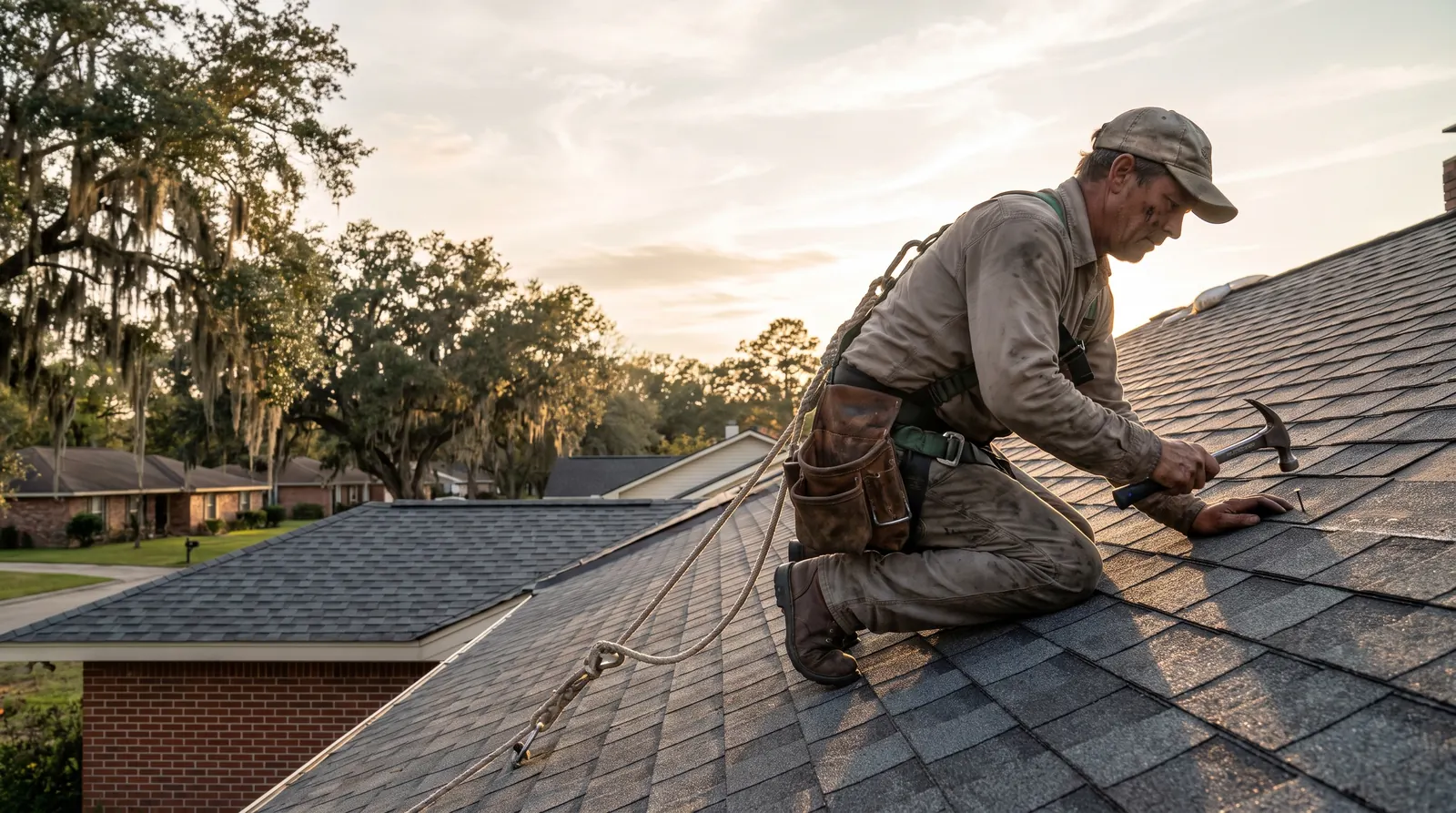
Roof Leak Repair
Roof Leak Repair That Starts at the Source
Seeing a ceiling stain or a drip after heavy rain? Call us to describe the leak and request a free estimate.
- Free written estimates
- Serving Baton Rouge & nearby
- Fast call-backs
Get your free estimate
Tell us what's going on. We call you back fast.
Why Roof Leaks Are Hard to Pin Down
A roof leak rarely shows up where it starts. Water can enter at a pipe boot or a lifted shingle, run down the underlayment or along a rafter, and drip onto the ceiling several feet away. That is why patching the spot above the stain often fails, and the same leak comes back with the next storm.
Baton Rouge gives leaks plenty of chances to show themselves. Summer thunderstorms can drop a lot of rain in a short time, and tropical systems during hurricane season push water sideways under shingles and flashing. A small weakness that stays dry in a light shower can let water in when rain is heavy or wind-driven.
Our roof leak repair work in Baton Rouge focuses on finding the entry point first. Once we know where water is getting in and why, we can explain the repair, what it should cost, and whether the surrounding roof is in good enough shape for a localized fix to last.
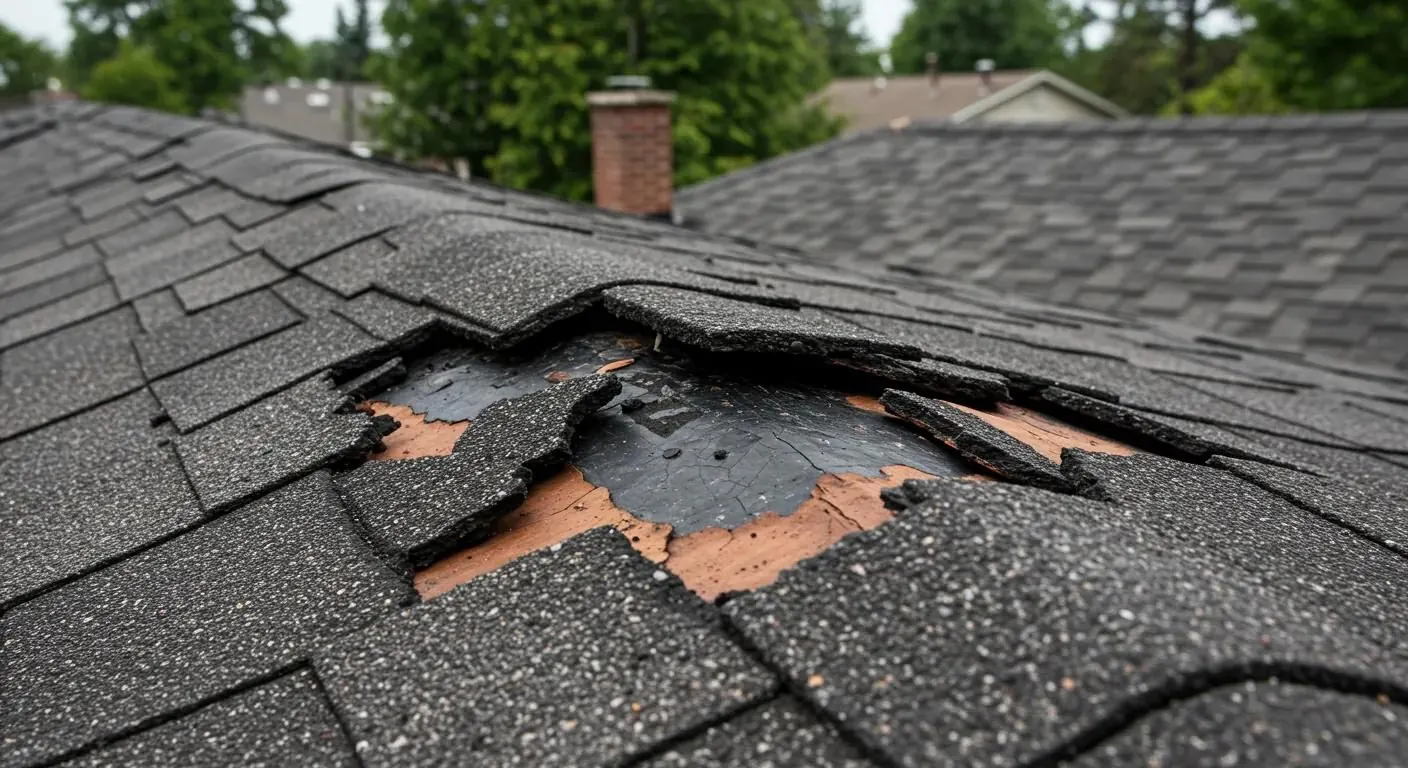
Where Roof Leaks Usually Start
Most leaks trace back to a handful of weak spots. Knowing the usual suspects helps narrow the search, but each roof is checked on its own terms because one roof can have more than one entry point.
Pipe boots and roof vents
The rubber collar around a plumbing vent pipe dries out and cracks in strong sun and heat. Once it splits, water runs straight down the pipe into the attic. This is one of the most common leak sources on Baton Rouge homes and is usually a modest repair when caught early.
Valleys
Valleys carry water from two roof planes at once, so they handle more runoff than any other part of the roof. Worn shingles, debris buildup from nearby trees, or a poorly cut valley can let water back up and find its way under the roofing.
Flashing at walls and chimneys
Where a roof meets a wall, dormer, or chimney, metal flashing keeps water out of the joint. Loose, rusted, or missing flashing can send water behind siding or brick and into the framing, sometimes far from where the stain appears.
Damaged or missing shingles
Wind can lift or tear shingles and break the seal that holds them flat. Even when a shingle stays in place, a broken seal lets wind-driven rain slip underneath. Exposed nail heads and cracked shingles can also let water through.
Roof edges and drip edge
Clogged gutters can back water up under the first course of shingles, and a missing or damaged drip edge can let water wick into the fascia and decking. These leaks often show up as stains near exterior walls or rot along the eaves.
Pricing
Roof Leak Repair Costs in Baton Rouge
| Repair type | Typical range | What moves the price |
|---|---|---|
| Pipe boot replacement | $150 – $450 | Number of boots, roof pitch, condition of nearby shingles |
| Minor leak repair (shingles or sealant) | $300 – $1,000 | Time needed to find the source, access |
| Flashing-related leak | $400 – $1,500 | Wall, chimney or skylight location, extent of damage |
| Valley leak repair | $500 – $1,800 | Length of valley affected, shingle type, matching |
| Leak repair with decking replacement | $800 – $2,500 | How far water damage spread under the roofing |
Typical ranges for planning only, not quotes. The final price depends on the roof's size, pitch, material, access, and what we find once the leak source is opened up. You get a written estimate before any work starts.
How it works
From Ceiling Stain to Sealed Leak
- 1
Call and describe the leak
Tell us where the stain or drip is, when it shows up, and whether it happens in every rain or only in heavy, wind-driven storms. Those details help narrow the search.
- 2
Inspect inside and out
We look at the ceiling and attic where accessible, then check the roof above for flashing, penetrations, valleys, and shingle damage that match the pattern.
- 3
Explain the likely cause
We walk you through where we believe water is getting in, what has been damaged, and whether the decking or framing appears affected.
- 4
Approve a written estimate
You get the proposed repair, materials, and price in writing. Nothing starts until you agree to the scope.
- 5
Repair and check the result
The repair is completed when weather allows. We let you know what to watch for during the next heavy rain so you can tell us right away if anything looks off.
Why Baton Rouge Homeowners Call Us
Source before patch
We look for where water enters the roof, not just where it lands. Fixing the actual entry point is what keeps a leak from coming back after the next storm.
Attic and roof checked together
Where the attic is accessible, water trails, stained decking, and damp insulation help connect the inside symptom to the outside cause.
Honest about repair limits
If a roof has leaks in several places or the shingles are near the end of their life, we will tell you a patch may only buy time, so you can plan accordingly.
Clear written scope
You see what we plan to fix, how, and at what cost before any work is approved. If hidden damage turns up, we discuss it with you before going further.
Questions
Common Questions
Why does my roof only leak during some storms?
Many leaks only appear when rain is heavy or blown sideways by wind, which pushes water into gaps that stay dry in a light shower. Leaks that show up only in certain storms often point to flashing, a lifted shingle seal, or a valley problem.
Is a small ceiling stain worth calling about?
Yes. A small stain usually means water has already soaked through the decking, insulation, and drywall. In Baton Rouge humidity, damp materials can also encourage mold and rot, so it is better to find the source while the damage is limited.
Can you fix a leak without replacing the roof?
Often, yes. Most leaks come from one specific weak point, such as a pipe boot, flashing joint, or damaged shingle. If the rest of the roof is in fair condition, a targeted repair is usually the sensible choice.
What should I do while I wait for the repair?
Catch drips with a container, move belongings away from the wet area, and keep away from wet light fixtures or outlets. Do not climb onto the roof, especially while it is wet. Take photos of the stain so you can show how it changes.
Other Areas We Serve
We handle roof leak repair in these communities:
Not Sure What Needs Fixing?
Have a leak that keeps coming back? Call (225) 308-6880 and tell us what you are seeing so we can track down the source.